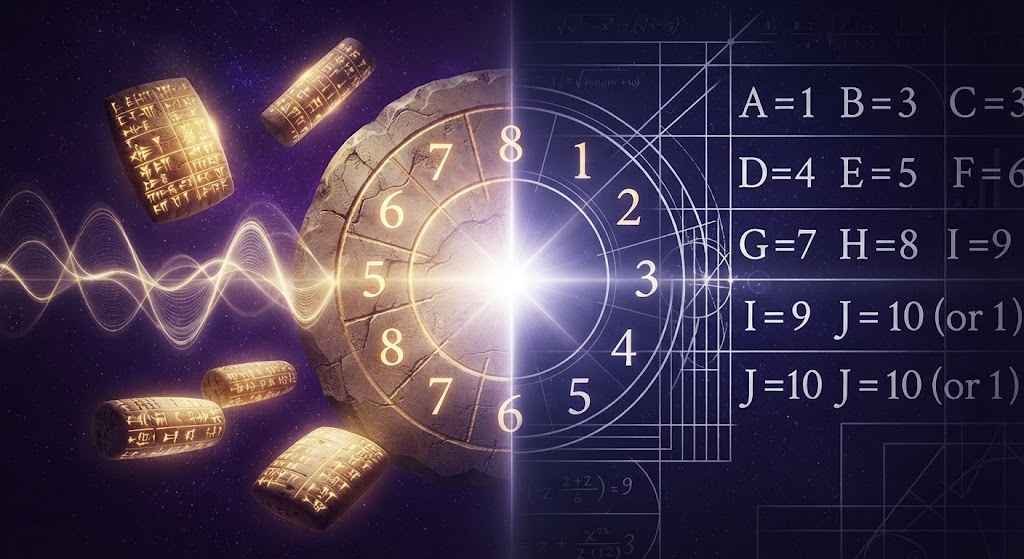
The debate around Chaldean vs Pythagorean Numerology centers on two distinct traditions that approach numbers through entirely different philosophical lenses, each carrying centuries of legitimate roots shaping how practitioners decode reality today.
Pythagoras, the Greek philosopher born around 570 BCE, traveled through Egypt and southern Italy, developing a unified framework where fundamental organizing force behind universal harmony expressed itself through a 1-9 repeating sequence.
What Is Pythagorean & Chaldean Numerology?

Chaldean numerology traces its origins to Ancient Babylon, making it the older of the two systems. Built on sound vibration and sacred letter-number principles, it treated 9 as spiritually separate, never assigning it to letters within calculations.
Pythagorean numerology emerged from Greece, where structured, alphabetical order gave every letter a sequential numeric home. This comparison between ancient systems defines today’s debate — not as a flaw, but as proof that different historical foundations shape different results entirely.
Key Differences Between the Two Systems
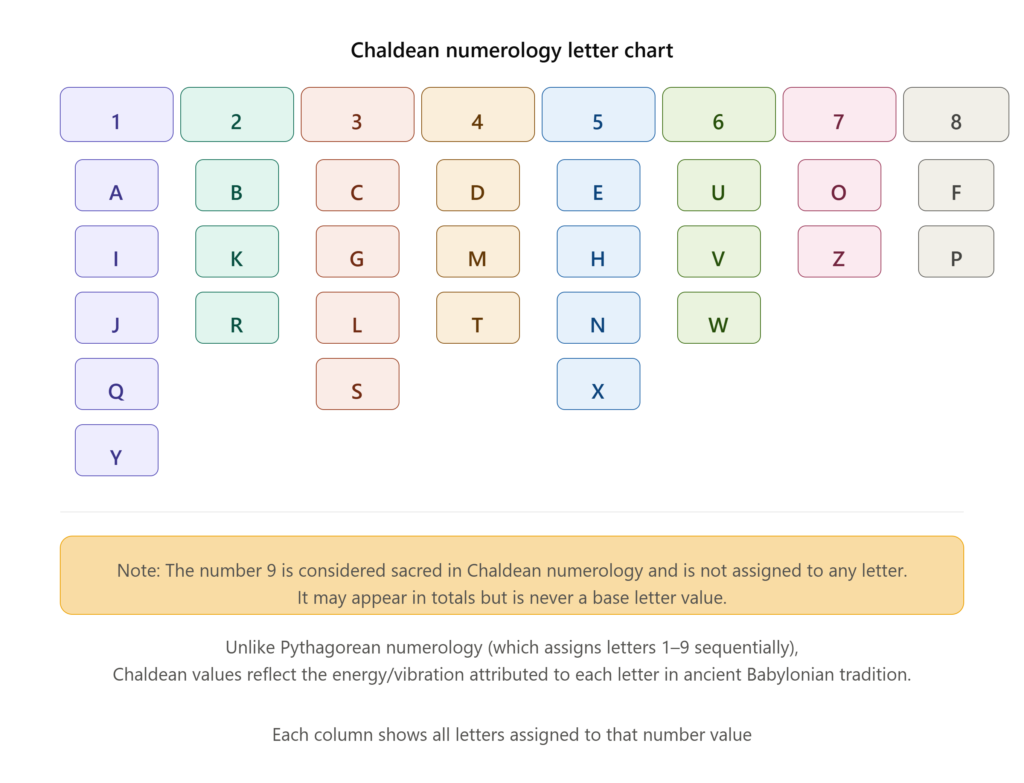
Most practitioners discovering numerology assume both systems operate on similar logic—they don’t. The Chaldean approach assigns values by sound vibration, while Pythagorean follows strict alphabetical sequence, making every letter carry a potentially different number. Take F: Pythagorean assigns F=6 (its sixth letter position), but Chaldean gives F=8, because that’s the frequency F is believed to vibrate at energetically. That single calculation ripple changes entire name readings.
The structural difference between 1–8 vs. 1–9 ranges matters more than most beginners realize. Chaldean system deliberately withholds 9 from direct letter assignments across its 26 letters, treating nine as sacred completion. Pythagorean system uses 9 values, distributing numbers evenly. This compresses the Chaldean chart differently, altering distribution of totals throughout any name chart analysis significantly.
Sound vs. Sequence
Chaldean numerology doesn’t follow alphabetical order — it maps letters based on sound vibration, which is why practitioners consider it more energetic than mechanical. Every letter carries a vibrational quality determined by how it resonates spoken aloud, not its position.
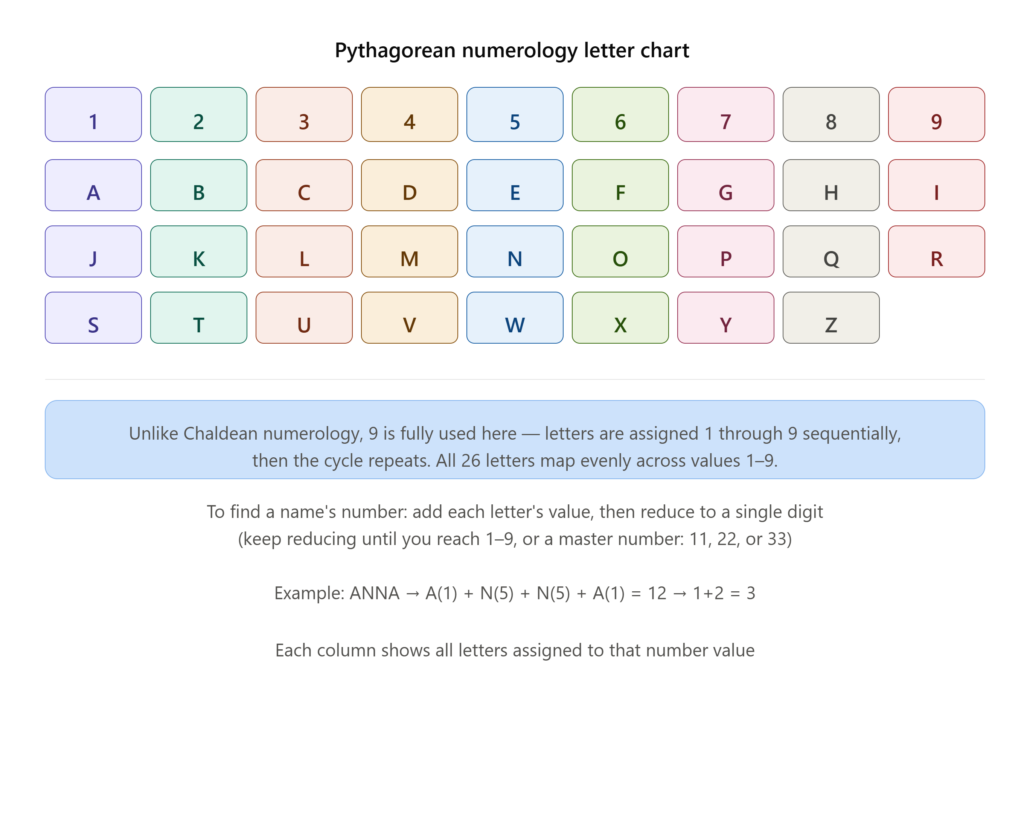
Pythagorean thinking built its sequential framework on pure mathematical order: A=1, B=2, C=3 through I=9, then J=1, K=2 repeating. That predictable 1-9 cycle made calculations uniform, but critics argue it sacrifices sound-based symbolic depth for logical convenience.
1–8 vs. 1–9
Pythagorean numerology maps letters across a sequence of 1 through 9, following a clean alphabetical order that makes the system intuitive and broadly approachable. Chaldean assigns numbers differently, deliberately excluding 9 from direct letter mapping due to its sacred spiritual weight.
What strikes experienced practitioners most is how this single numeric gap reshapes entire charts. The Chaldean range of 1 through 8 creates a tighter vibrational field, where each letter carries concentrated energetic quality, producing different results compared to its counterpart.
Birth Name vs. Everyday Name
Most Chaldean practitioners treat the birth name as a fixed, unchangeable blueprint — the vibration encoded at birth timing reflects your destiny and long-term direction. Your birth certificate carries energetic influence beyond ordinary identity.
Pythagorean numerology uniquely validates the everyday name — the name in active use — because vibrational energy tied to day to day interactions shapes tendencies, strengths, and lived experience just as powerfully as birth date.
Letter-to-Number Assignments
What separates these two numerology systems isn’t philosophy alone — it’s the foundational pattern of how letters map to numbers. The Pythagorean method follows vibrational grouping by assigning values sequentially, while Chaldean tracks energetic quality through sound-based differences in results and methods.
Most practitioners overlook how profoundly letter-to-number mapping shapes final results. When the same name runs through different methods, the pattern shifts entirely. Chaldean honors energetic quality per letter sound, whereas Pythagorean relies on positional vibrational grouping — a core difference that redefines how both numerology systems assign meaning.
Birth Date vs Name Emphasis
Practitioners often discover that Chaldean numerology treats your birth name as the primary vibrational record, while Pythagorean approaches anchor foundational pattern analysis within birth-date calculations, revealing your Life Path differently.
What surprises most people is how name energy and birth date can diverge sharply across these two systems. The Chaldean lens reads active everyday name vibration, while Pythagorean tracks your blueprint through fixed numbers from your born date.
Simplicity vs Mysticism
Pythagorean numerology earned its reputation through structured rules and clarity. From my experience, beginners gravitate toward its alphabetical sequence because memorize-ready chart patterns make calculation rules feel approachable, almost refreshingly logical and grounded.
Chaldean numerology operates from mystical origins, treating numbers as carriers of vibrational sound frequency. The philosophical approach here isn’t academic — it’s energetically alive, where each letter‘s symbolic meaning whispers something the Pythagorean grid simply wasn’t designed to capture.
Which System Is More Accurate
Most practitioners quietly acknowledge that accuracy depends on what questions you’re asking. Pythagorean handles foundational personality patterns beautifully, while Chaldean reveals deeper vibration beneath your birth name. Both systems serve different purposes, not competing accuracy claims.
From experience, beginners find Pythagorean far more approachable. Its simplicity makes early calculations less intimidating. However, treating it only as a starting point limits your reading. Chaldean functions as a second lens, one that resonates differently once your system literacy grows considerably.
Should I Use My Birth Name or My Current Name
Most practitioners working with Chaldean numerology argue your birth name holds the original vibrational blueprint — that foundational energetic signature recorded on your birth certificate remains your source material regardless of name changes.
Pythagorean tradition handles this practical difference differently. It calculates both your birth name and everyday name — someone commonly known as Peggy rather than Margaret carries a distinct vibration shaped by lived experience and active naming patterns.
Why Do the Two Systems Give Me Different Numbers
Most practitioners never question why two readings from the same name produce contrasting totals. The Chaldean and Pythagorean systems follow distinct letter-number charts, so identical calculations yield different results naturally.
Each system operates from a separate calculation philosophy. Pythagorean assigns numbers by alphabetical sequence, while Chaldean groups letters by vibrational sound frequency, making different charts produce genuinely different core numbers every time.
Is One System More Accurate Than the Other
Accuracy in numerology rarely comes from the system itself — it emerges through thoughtful interpretation. Both frameworks track personality patterns and life themes, yet neither prediction is universally superior. Fixed events resist any single system’s claim to absolute truth.
From personal practice, each system reveals different layers. Pythagorean numerology excels at mapping broad life themes, while Chaldean precision sharpens prediction of behavioral personality patterns. Accuracy ultimately depends on the practitioner’s interpretation skill, not the system chosen.
Is Chaldean More Powerful
Practitioners who’ve spent years working with vibration and name analysis often find Chaldean’s sacred roots yield a distinct energetic quality unlike any modern approach. This system doesn’t simply assign numbers — it channels sound frequency directly.
The Chaldean tradition carries spiritually powerful historical weight, rooted in ancient Babylon and mystical philosophy. Where Pythagorean offers structured clarity, Chaldean unlocks symbolic depth through letter assignments that reflect vibrational sound rather than alphabetical order alone.
Should Beginners Start With Pythagorean
For a beginner stepping into numerology, the Pythagorean system offers something rare — structured logic grounded in alphabetical order. Its beginner-friendly design, backed by books, online calculators, and courses, makes calculations far more accessible than diving into esoteric traditions.
The Chaldean numerology path demands awareness of vibrational sound, letter assignments, and mystical depth before basics click. Most modern numerologists recommend building your foundation on simplicity first — clarity over complexity rewards the serious student long-term.
What if I Have a Middle Name or a Suffix Like Jr.
Your full birth name — including any middle name — belongs in your name calculation under both systems. Practitioners using Chaldean or Pythagorean numerology rarely debate this; completeness preserves vibrational integrity across all three components.
Suffixes like Jr. or Sr. present a more subjective edge case. Most serious practitioners omit generational tags since they reflect birth certificate technicality, not sound frequency or energetic quality — your letters carry the identity, not the label.
Can My Name Numbers Change if I Change My Name?
When you change your name, the letter values shift entirely within any numerology system. Your birth name holds a fixed vibrational blueprint, while a different letters arrangement creates a genuinely different numerical vibration that practitioners actively track.
A married name or nickname in day to day use carries its own energetic influence across both Pythagorean and Chaldean traditions. Many numerologists treat the everyday name as a second lens, revealing active vibration shaping your current lived experience.
The Pythagorean Letter Chart
The Chaldean Letter Chart
Why There Is No 9?
The Chaldean chart deliberately excludes 9 from its letter-number assignments, treating it as sacred and untouchable. Unlike Pythagorean logic, where 1 through 8 and 9 are all assigned across the letters, Chaldean reserves nine for divine completion alone.
Practitioners rooted in mystical traditions understood that assigning 9 to any letter would corrupt its vibrational qualities. This philosophical difference shapes every reading — the energetic quality of each name remains undiluted, honoring ancient Chaldean tradition as originally practiced in ancient Babylon.
The Same Name, Calculated Both Ways
Running the same name through both systems reveals something genuinely surprising: the reading shifts, not because one system is flawed, but because each assigns a distinct vibration to the same blueprint of letters.
The Pythagorean chart labels a name with Expression, Soul Urge, and Personality values using 1 through 9, while Chaldean spiritual depth reveals a Master Builder 22 or humanitarian vision coded within potential untouched by the other system.
Chaldean Calculation
JANICE MAY BARKER carries rare Chaldean significance. Letters J, A, N, I, C, E, M, Y, B, R, K each hold values 1, 5, 3, 4, 2, totaling 36 and reducing the Expression to 9.
Vowels within this powerful name form the Soul Urge, totaling 14 and reducing to 5. Meanwhile, consonants shape the Personality at an unreduced 22 — a Master Number — carrying extra significance as a Master Builder expression.
A Note on Compound Numbers
Most practitioners overlook how compound numbers reshape interpretation within both systems. In Chaldean work, a raw total like 23 carries distinct vibrational weight before single digits reduction — something Pythagorean charts typically bypass without ceremony.
From my own readings, treating master numbers and compound totals as complementary layers reveals personality traits invisible in final single-digit results. The birth name vibration, when left unreduced briefly, exposes life themes that standard numeric reduction quietly discards.
Can You Use Both Pythagorean and Chaldean Numerology Together
Most practitioners I’ve worked with treat these as competing systems, but that framing misses something crucial. Using both simultaneously gives you a second perspective — one grounded in birth-date calculations, the other in name energy and subtle influences.
The real advantage emerges when Chaldean analysis of vibration and energetic influence aligns with your Life Path reading. Where results diverge, that gap itself becomes useful information — a signal worth investigating rather than a contradiction demanding resolution.
Why Most Modern Numerologists Choose Pythagorean Over Chaldean Numerology
Most practitioners working within the modern Western numerology space gravitate toward Pythagorean methods because the system offers structured rules that beginners can immediately apply without deep esoteric background or guidance.
The Pythagorean chart maps the entire alphabet through a sequence that feels logical, making calculations tied to birth dates and names far more consistent and accessible across English-language resources and Western books today.
Final Thoughts
Both numerology systems carry distinct merit — one rooted in mystical roots and ancient esoteric tradition, another in logical framework and modern practice. Practitioners navigating different questions find value across each perspective, depending on their intent and foundational pattern seeking.
Experienced readers often apply cross-verification, using birth date data alongside name vibration analysis. The real insight lies not in declaring superiority but recognizing that each system provides a second lens through which deeper structural blueprint patterns become visible.